


There’s a Swedish word that, when said aloud to an Italian, will cause them to either snort into their espresso or look at you with wide, delighted eyes.
That word is fika.
In Swedish: a coffee break with something sweet. Sacred, non-negotiable, institutionalised.
In Italian: well. Let’s just say fica is a word your grandmother would wash your mouth out for, and leave it there.
But here’s the thing. The Italians are wrong to laugh. Because fika — properly understood — is one of the most quietly radical ideas in modern working life.
Let me tell you what a coffee break looks like in most of the world.
You’ve got twelve minutes before your next meeting. You shuffle to the machine in the corner — the one that’s been making a suspicious noise since 2019 — and you extract something brown and hot into a plastic cup. You drink it standing up, possibly while checking your phone, definitely while thinking about the twelve minutes. Then you go back.
That’s not a break. That’s a reboot. A human Ctrl+Alt+Delete.
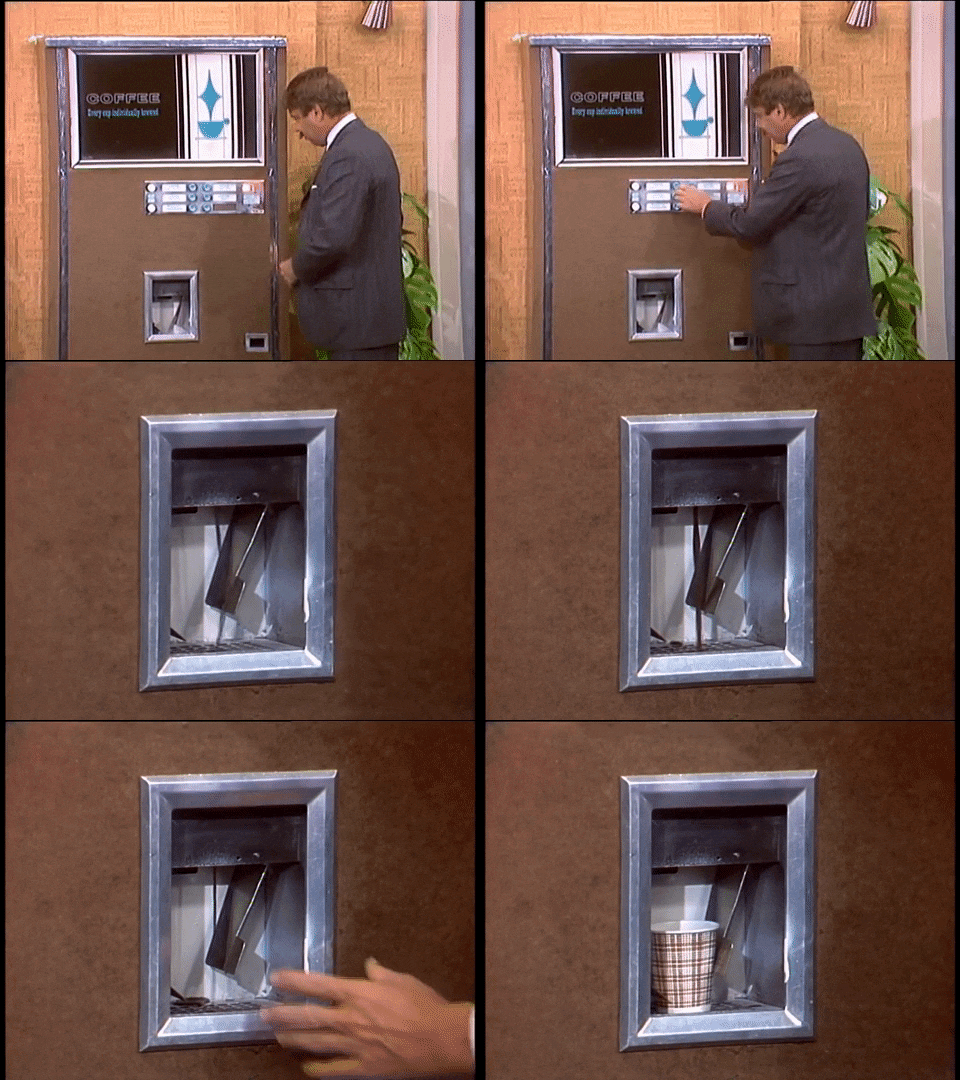
Fika is something else entirely.
In Sweden, fika happens at a set time — usually mid-morning, sometimes mid-afternoon — and it lasts fifteen to twenty minutes. Some offices have a dedicated fika room. Some have a kitchenette and a rotation system: one person brings the coffee, another brings the baked goods, and this rotation goes from intern to CEO without exception or ceremony. Nobody is above the cinnamon roll.
It’s short. It’s regular. It’s accompanied by something that qualifies as a treat.
And — crucially — it’s together.
Not “grab a coffee whenever.” Not “take a personal wellness moment.” Together. At the table. Talking about something that has nothing to do with Q3 targets.
The Germans prescribe spa retreats before burnout. The Norwegians say you’re allowed to exist in nature without asking anyone’s permission. The Spanish throw a street party in a parking lot and call it community. And the Swedes? The Swedes look at the workday and say: twice a day, we stop. We sit. We eat something nice.
You see the pattern.
What fika understands — what all these things understand — is that productivity is not the natural state of a human being. Rest is not laziness dressed up in a dressing gown. And the conversation you have over a cardamom bun about your colleague’s terrible weekend holiday is not wasted time.
It is, in fact, the whole point.
There’s research behind this, if you need the permission of data. Short social breaks improve focus, reduce stress, increase team cohesion. But honestly, you don’t need a study. You just need to ask yourself when you last sat down with the people you work with and talked about nothing important for fifteen minutes.
If the answer is “I can’t remember,” Sweden would like a word.
I’ve been thinking about why these European rituals keep surprising people — why the Kur feels radical, why allemannsretten feels almost utopian, why fika sounds like a luxury when it’s actually just a cup of coffee and a biscuit.
I think it’s because somewhere along the way, we internalised the idea that comfort is something you earn. That rest is a reward for sufficient suffering. That the cinnamon roll comes after you’ve proved yourself.
Fika disagrees. Politely. With excellent pastry.
It says: you are a person first. The work is secondary.
Sit down.