


I have walked out of a cinema.
Not because of an emergency. Not because someone was talking. Because I decided the film was too stupid to deserve my continued presence. The film was Eurotrip. I was nineteen. I left at the twenty-minute mark and walked home feeling completely justified.
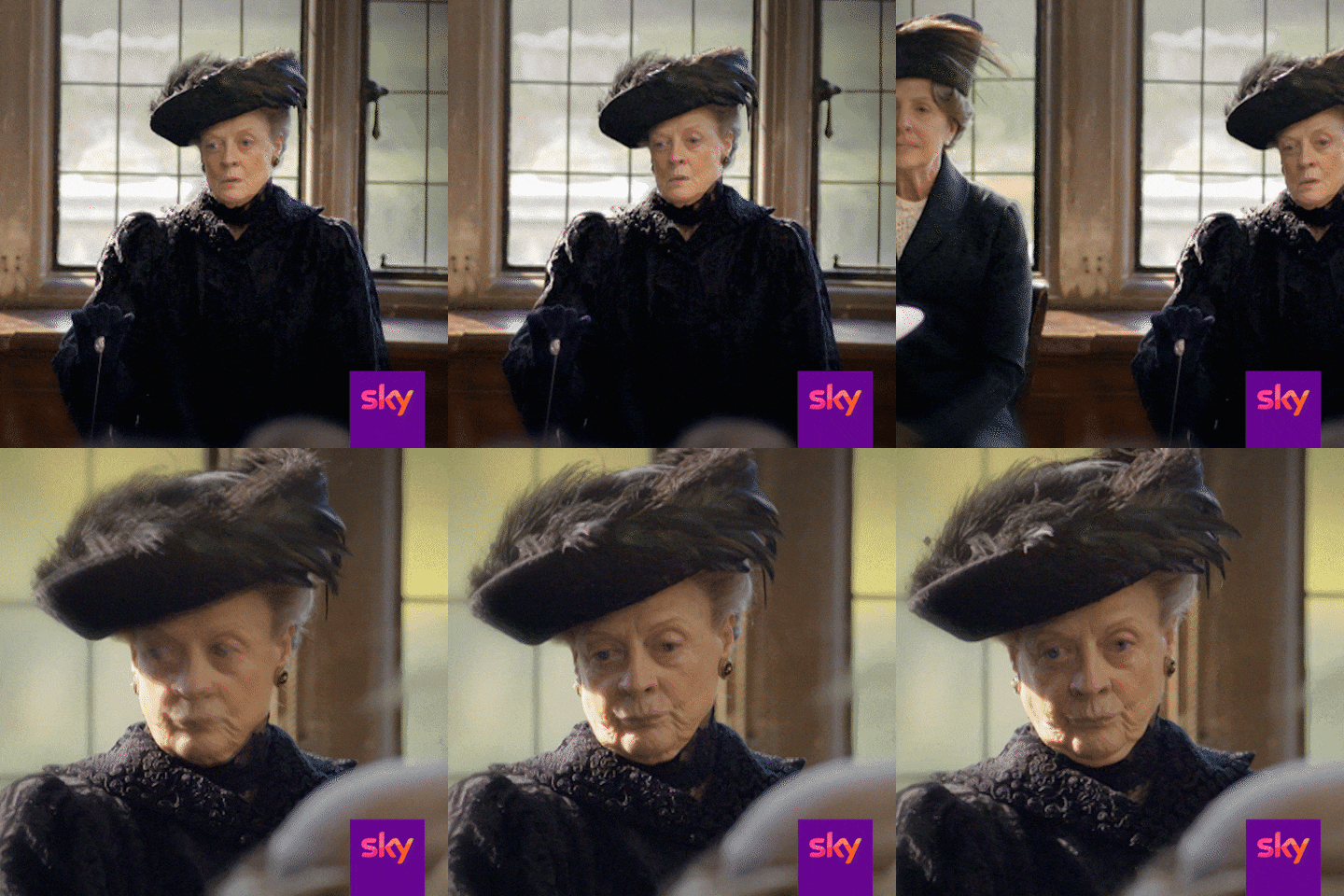
This is the kind of person I was.
I read the Classics. Dickens, Austen, Joyce, Woolf — not from obligation but from genuine conviction that these were the correct things to have read, and I was very interested in being correct. I kept a mental ledger of books I’d finished and books I considered beneath me, and I consulted it often and without embarrassment. I was a delight at parties.
Film: the Eurotrip incident was not isolated. I had opinions about dialogue, plot logic, the use of stereotype as a substitute for characterization. I could appreciate bad films — but only the kind of bad that transcends incompetence to become something formally interesting. Duchamp’s Fountain in multiplex clothing. Nicolas Cage in films where he appears to be conducting a private war against the concept of restraint (i.e.: most films). The bad that knows what it’s doing.

Music: the sharpest edge. I cared mostly about lyrics — story, rhyme structure, vocabulary. Dylan’s “It’s Alright, Ma.” Courtney Barnett’s “History Eraser.” Songs where language was actually doing something. What I couldn’t forgive was laziness. The cheap fillers “baby” or “yeah.” The rhyme a five-year-old could have managed. Love songs that were essentially ooh you’re so pretty I love you please don’t leave me dressed up in a major key and sold as emotion.
James Blunt, for instance.
You’re beautiful, you’re beautiful, you’re beautiful,
it’s true
I saw your face
in a crowded place
and I don’t know what to do
‘cause I’ll never be with you.
Do. You. Face. Place.
These are not the rhymes of a man who tried and was defeated. These are the rhymes of a man who did not try.
I once spent fifteen minutes making this case to my husband. He listened. He conceded the rhymes. And then he said something I wasn’t ready for.
“At least he made something,” he said. “He wrote a song and recorded it and put it in the world. It’s easy to judge things. It’s much harder to make them.”
I filed this under Things I Am Not Yet Ready To Agree With.
I have a large folder.
Then I started writing a novel.
It comes out in June — still slightly surreal to say out loud — and the process has given my husband’s observation a weight it didn’t have when I first heard it.
Making something you intend other people to read is not like reading. It’s more like walking into a crowded room with no clothes on, if the room also had strong opinions about narrative pacing. The self-doubt is constant and specific: I think this is good, or at least not bad, but what if I’m wrong? What if it’s bad and I can’t see it? WHAT IF IT’S LIKE THAT JAMES BLUNT SONG?
This is Dunning-Kruger territory and it is not comfortable. The people who are least competent are often the most confident, because they don’t yet have the framework to recognize their own gaps. The people who understand the field well enough to diagnose the problem are also the people who might have it. There is no reassuring position in this framework. I checked.
The logical next move is to look outward for the certainty your own judgment can’t provide. But alas, professional criticism doesn’t help either. The history of literature is a graveyard of editors who were wrong. Stoner sat unread for forty years. Bukowski was rejected for the better part of a decade. Even Harry Potter was turned down by twelve publishers — I think about those twelve editors sometimes with unashamed Schadenfreude.
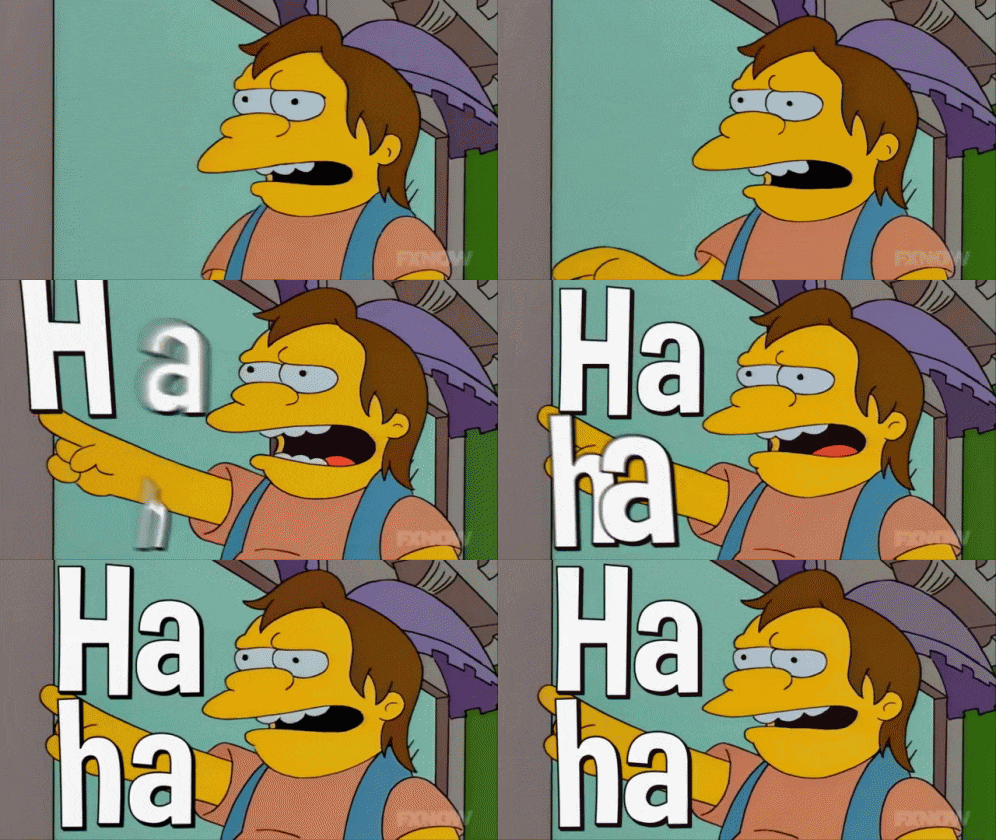
The truth is, art is subjective. All the way down, apparently. Standards exist, but our ability to identify them in real time, in the work of people we don’t yet know, is imperfect and inconsistent and nobody can give you that certainty from the outside.
I am still a snob.
I want to be clear about this. The Blunt lyrics remain, in my view, not good. I have not revised my opinion of Eurotrip, though I will never know what happened in the final eighty minutes. My aesthetic frameworks are intact and I stand by them.
But something has changed. When I judge something now — and I do judge things, still, regularly — there’s a voice that asks: did you make it? Do you know what it costs?
I know now. We’ll see how June goes.
The snob is still here. She’s just quieter than she used to be.