


There’s this scene that shows up in a lot of romance novels where the devastatingly handsome love interest does something that, if we’re honest, would be deeply unsettling in any other context. Like watching you sleep without permission. Showing up repeatedly after you’ve said no. Getting physically intimidating until you agree to give him a chance. Behavior that gets framed as “he just wants you so badly he can’t control himself.”
And we swoon. We dog-ear the page. We think, “God, that’s so romantic.”
Now imagine Gollum doing it.
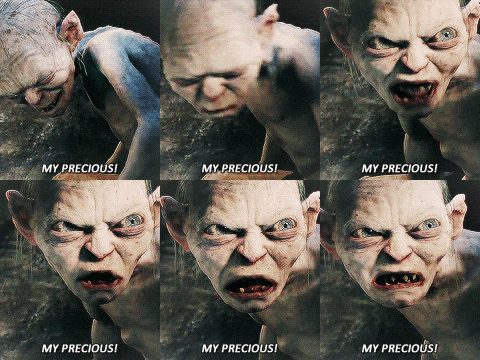
Still romantic? Or are you calling the police and investing in better locks?
This is what I call the Gollum Test, and it’s my benchmark for whether something is actually romantic or just tolerated harassment because the guy in question has cheekbones that could cut glass. If a gesture only works when performed by someone who looks like they wandered off a Calvin Klein billboard, it’s not romance. It’s just us making excuses for bad behavior because we’re attracted to the person doing it.
Think about actual romantic gestures. Flowers. A handwritten note. A surprise candlelit dinner. These work regardless of who’s doing them. If Gollum brought you flowers, you’d probably still think it was sweet—weird, sure, but sweet. You might not marry him, but you’d acknowledge the effort. That’s because these gestures respect boundaries while expressing affection. They don’t require you to ignore red flags the size of circus tents.
But breaking into somebody’s house to watch them sleep? Showing up uninvited after they’ve said no? Getting jealous and possessive and calling it “passion”? Physically cornering someone until they agree to a date, a kiss, a relationship, sex? These only get filed under “romance” if the person doing them has glistening abs and a jawline that makes you forget what consent means.
Of course it feels good to be wanted. There’s something intoxicating about the fantasy of someone desiring you so intensely they lose all sense of appropriate behavior. I get it. I write romance. But here’s the problem—desire doesn’t equal entitlement. Wanting someone badly doesn’t give you the right to ignore their boundaries, and yet we’ve built an entire genre that all to often pretends it does.
The romance industry has spent decades selling us the idea that if a man is hot enough, stalking becomes devotion. Controlling becomes caring. Ignoring “no” becomes persistence. And we’ve bought it so thoroughly that we’ve stopped noticing we’re romanticizing the exact behaviors that, in real life, are precursors to violence against women.
Because here’s the thing: abuse doesn’t announce itself. It starts small. It starts with jealousy framed as protectiveness. With showing up uninvited framed as spontaneity. With ignoring boundaries framed as passion. And if we’re training ourselves to find these things romantic in fiction—if we’re teaching young readers that love looks like someone who won’t take no for an answer—we’re doing real damage.
So here’s my proposal: before you swoon over a romantic gesture in a book (or real life), run it through the Gollum Test. If it only works because the guy is hot, it’s not romantic.
It’s just a restraining order waiting to happen.
If you liked this, share it with your friends. If you didn’t, no one needs to know.