


There is a specific kind of panic that arrives after 30, when you realize that no one is coming to change your life. There will be no dramatic intervention. No last-minute twist. No stranger in the rain who happens to love all the same obscure things as you and also has a pension plan.
If something continues, it’s because you are actively allowing it. If it ends, it’s because you ended it. This is not romance. This is logistics.
In your twenties, love felt like an external force. Things happened. You fell. You were swept. You were blindsided. Responsibility was optional, because everything could be blamed on timing, chemistry, or the general confusion of being alive and not knowing what capital gains tax is.
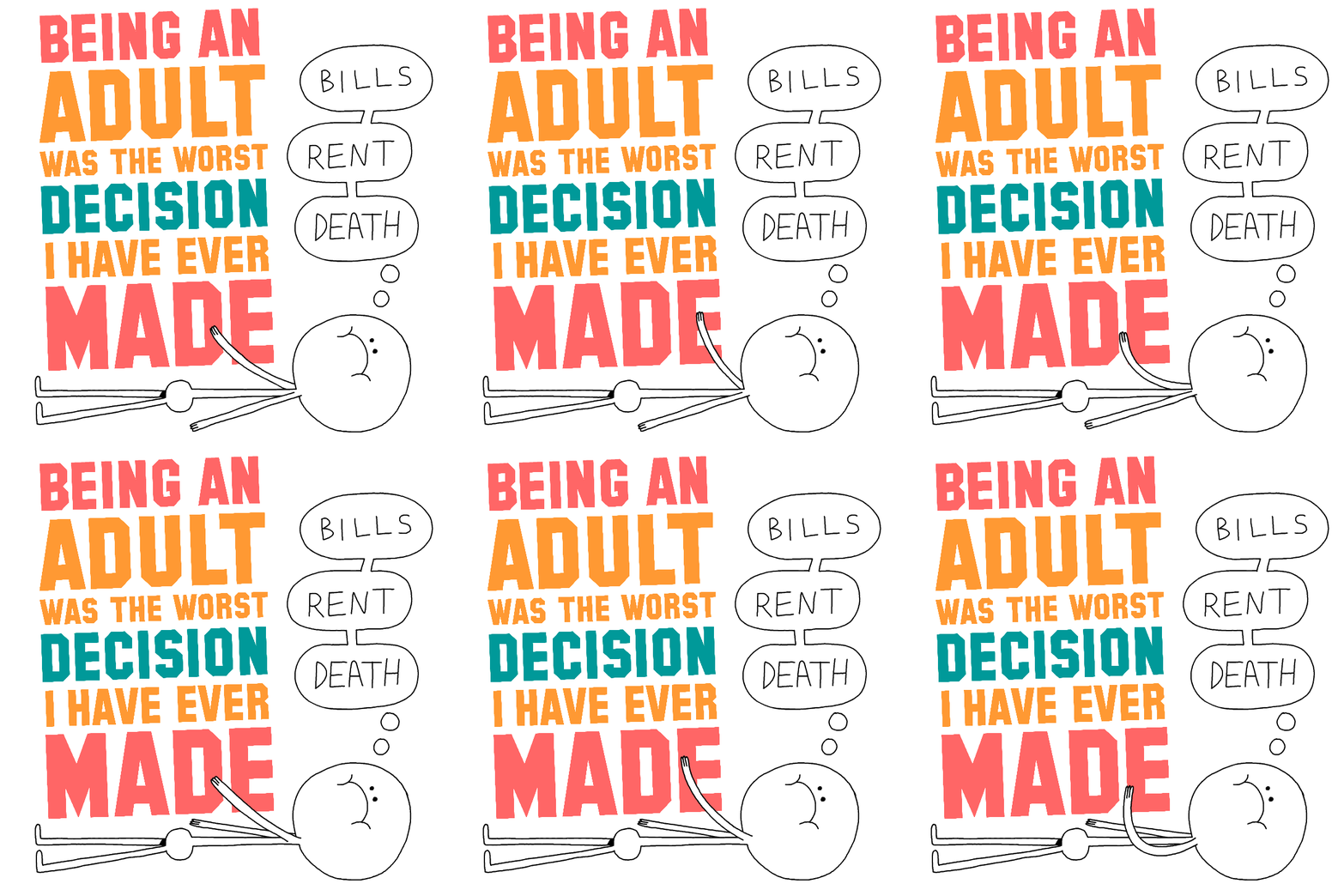
After 30, this excuse quietly expires.
Nothing is accidental anymore.
You don’t “end up” in relationships. You enter them. You stay in them. You renew them, or you don’t. Even inertia becomes a decision, which is deeply unfair — because sometimes you would like to do absolutely nothing and still be considered innocent. Courts don’t allow this. Neither does your therapist. Neither does love, it turns out.
Commitment, at this stage, stops being about grand gestures and becomes about exclusion. Saying yes to one person means saying no to several hypothetical lives. Other cities. Other lovers. Other versions of yourself that remain permanently untested. This is the part no one romanticizes, because it’s hard to sell longing for things you deliberately let go of. There’s no market for I Could Have Lived in Lisbon But Here We Are.
And yet, choosing is where love finally lives.
Not in potential — in repetition. In waking up and deciding, again, that this is the life you are participating in. Which sounds small until you realize how many people spend years doing elaborate emotional gymnastics specifically to avoid exactly that clarity.
Breakups after 30 reflect this shift. They are often calm, respectful, devastating in a very organized way. No screaming. No begging. Just two adults acknowledging that continuing would require a kind of effort neither wants to make — like a gym membership you both keep paying for and no one uses. You don’t leave because love is gone. You leave because it isn’t enough to justify the maintenance.
This is maturity, apparently.
The strange thing is that maturity doesn’t make love safer. It makes it more exposed. There’s no fantasy to hide behind. No narrative to blame. No mercury retrograde to pin it on, though God knows we’ve all tried.

If you stay, it’s because you want to. If you leave, it’s because you chose yourself, or peace, or a future that felt more honest.
Love after 30 doesn’t promise permanence. It offers agency.
And that’s the trade. You lose the drama of being overtaken. You lose the illusion that love will solve your life for you. What you gain is something quieter and more unsettling: the knowledge that love is something you build or dismantle with your own hands.
Every day.
Which sounds exhausting. And sometimes — let’s be honest — it absolutely is.
But it’s also the first time love stops happening to you and starts happening with you.
And that, whether or not it comes with fireworks or a man in the rain with a pension plan, is finally real.